> For the complete documentation index, see [llms.txt](https://docs.sandbox.com.vn/llms.txt). Markdown versions of documentation pages are available by appending `.md` to page URLs; this page is available as [Markdown](https://docs.sandbox.com.vn/1.-marketing/1.2-quan-ly-nguon-du-lieu/1.2.1-ket-noi-du-lieu.md).
# 1.2.1 Kết nối dữ liệu
Kết nối dữ liệu từ Ladipage để data tự động đổ về hệ thống Sandboxvn
1. Ở thanh menu chọn **Marketing -> Quản lý nguồn dữ liệu**
1. Nhấn vào nút "**Thêm mới**", sau đó điền các thông tin của các trường:
* Loại kết nối: Facebook, Landing, Website, PartnerShip.
* Tên nguồn dữ liệu: Tên của landingpage.
* Url nguồn dữ liệu: Đường dẫn về landing.
* Url API: Mã kết nối với form của Ladipage (Sau khi điền đầy đủ thông tin hệ thống sẽ tự sinh ra).
* Kênh quảng cáo: Tiktok Ads, Sendo, Lazada, Shopee.
* Dịch vụ: Phân quyền dịch vụ được chạy.
* Sản phẩm: Phân quyền sản phẩm được chạy.
* Ưu tiên sale: Phân quyền sale được chia data.
Nhấn "**Lưu**" hệ thống sẽ tự động sinh ra mã **Url API** mới.
3. Copy mã **Url kết nối** có dạng như bên dưới.
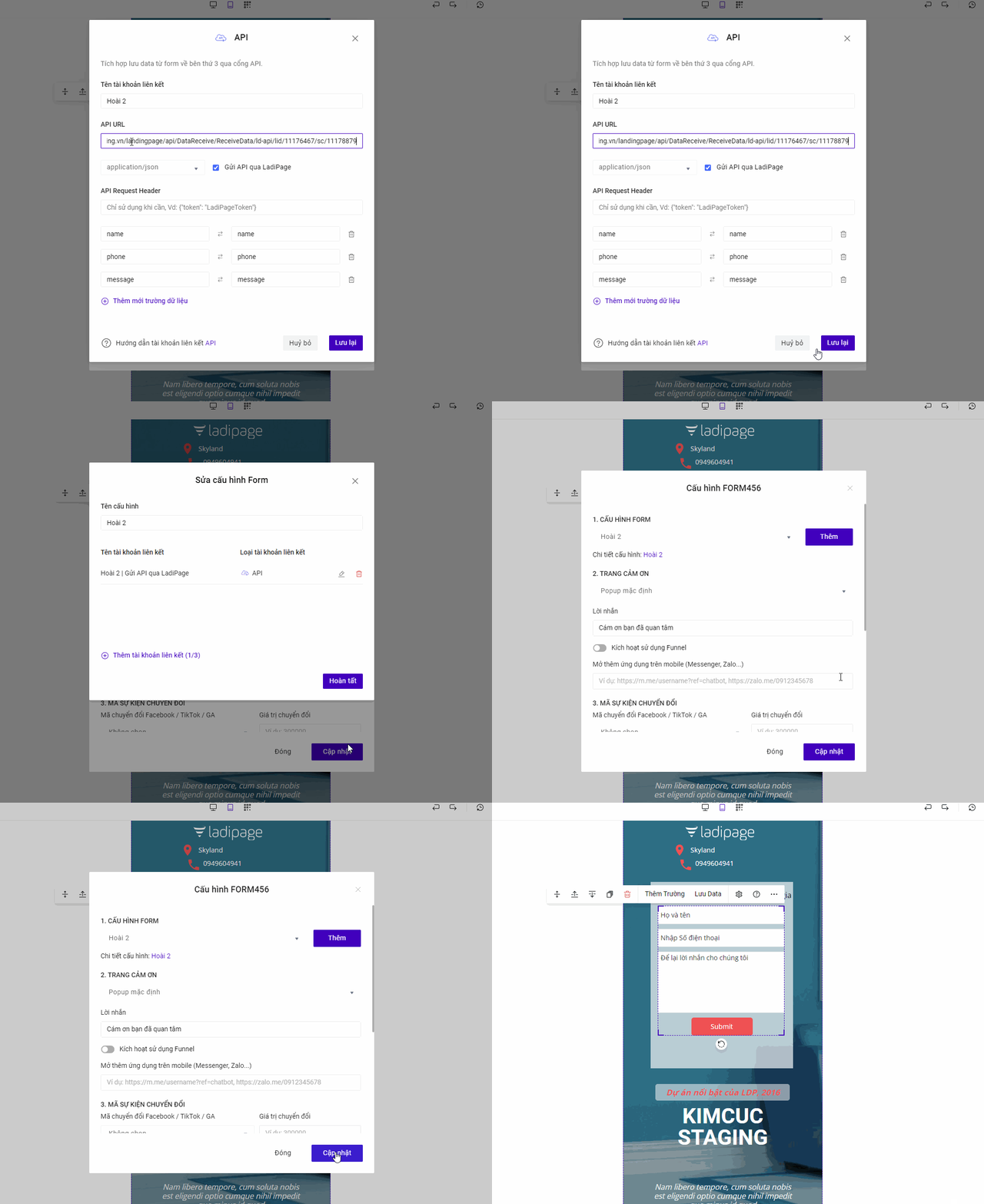
4. Gán mã **Url kết nối** vào **form Ladipage:**
* Anh/Chị copy link **Url kết nối** vào mục API URL ở form **Cấu hình tài khoản liên kết.**
* Tại mục API content type, anh/chị có thể chọn **1 trong 3 lựa chọn** sau**:** x-www-form-urlencoded/ multipart/form-data/ application/json.
{% hint style="info" %}
**Lưu ý: Ưu tiên Json**
{% endhint %}
{% hint style="info" %}
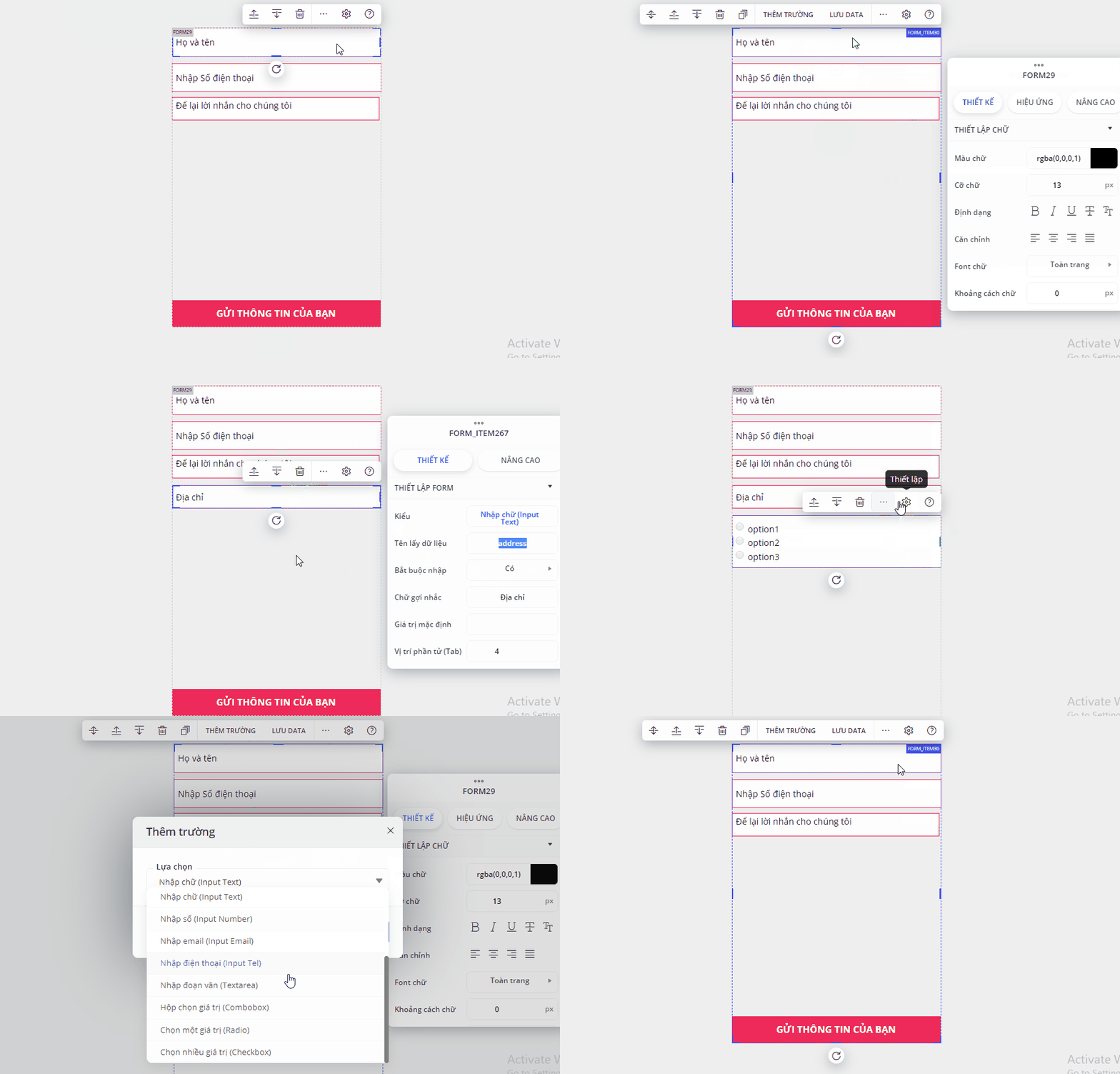
**Lưu ý:** Cần truyền đúng các trường từ Ladi sang SandboxVN
* 1/ name :Tên
* 2/ link: Đường dẫn
* 3/ phone : SĐT
* 4/ message : Tin nhắn
* 5/ date : Ngày tháng
* 6/ address: Địa chỉ
* 7/country : Quốc gia
* 8/ state: Bang
* 9/ district: Quận/ huyện
* 10/ ward: Phường/ xã
* 11/ products : Chọn 1 sản phẩm
* 12/ quantity : Số lượng
* 13/ utm\_source
* 14/ utm\_medium
* 15/ utm\_campaign
* 16/ utm\_agent
* 17/ utm\_channel
* 18/ utm\_content
* 19/ utm\_term
* 20/ ip
* 21/ singlechoice
* 22/ multiplechoice
* 23/ products : Sản phẩm
* 24/ dichvus : Dịch vụ
* 25/ combos : Combo
* 26/ thes : Thẻ
{% endhint %}
{% hint style="info" %}
**Lưu ý:** Mỗi khi thêm một trường mới cho form của Ladipage cần phải gán lại mã API để hệ thống nhận thêm trường mới.
{% endhint %}
5. Tìm kiếm nguồn dữ liệu:
* Có thể tìm kiếm nhãn khách hàng bằng cách nhập tên nguồn dữ liệu, url kết nối của nguồn dữ liệu muốn tìm vào hộp văn bản như hình dưới. Sau đó nhấn "**Tìm kiếm**" hệ thống sẽ hiển thị kết quả tương ứng.


.PNG)
.png)